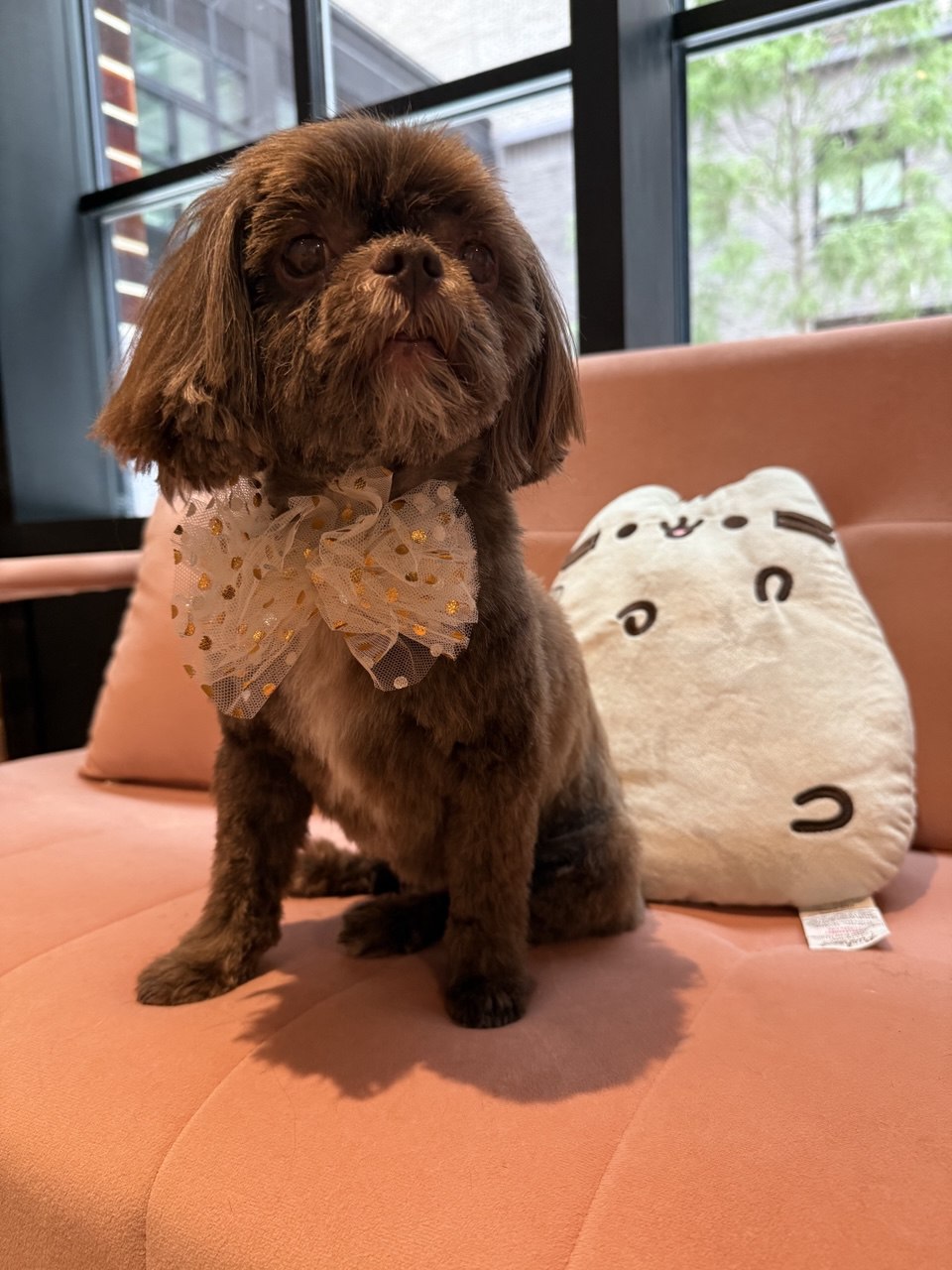
The Cavalier Coat: What Makes It Special
Cavalier King Charles Spaniels have a long, silky, slightly wavy single coat with feathering on the ears, chest, legs, feet and tail. Unlike Poodle crosses, Cavaliers don't have an undercoat — but their feathering tangles easily, particularly behind the ears and on the legs. The coat should look natural and flowing, never over-trimmed or poodled.
Grooming Frequency for Cavaliers
Professional grooming every 6–8 weeks is recommended for most Cavaliers. The primary work at each appointment is bathing, blow-drying, mat removal, feathering tidy, ear clean, nail trim and paw tidying. Full breed standard trimming for a show Cavalier requires more specialist skill and time.
The Critical Importance of Ear Care
Cavaliers are extremely prone to ear problems. The long, feathered ears trap moisture, limit air circulation and provide the perfect environment for yeast and bacterial infections. At every grooming appointment and at home once a week:
- Gently clean the outer ear canal with an appropriate ear cleaner
- Check for redness, smell or discharge — all signs of infection requiring vet attention
- Ensure the ear feathering doesn't trail in water or food bowls
Brushing at Home
Cavaliers need brushing 3–4 times per week to keep the feathering tangle-free. Use a pin brush followed by a wide-tooth comb, working from the ends towards the root. The behind-the-ear area and armpit feathering are the most mat-prone and need the most attention.
Trim or no trim? Traditional Cavalier grooming avoids heavy trimming to preserve the natural silhouette. A light neaten of the feet, underline and any straggling feathering is appropriate — but avoid scissors on the head or ears, which would change the breed's characteristic expression.
Paw and Nail Care
Cavaliers have hair growing between and around the toes that should be trimmed regularly to prevent matting and improve grip on smooth surfaces. Nails grow quickly and should be checked at every grooming appointment. Clicking nails on the floor are a key sign that grooming is overdue.
Health Monitoring During Grooming
Cavaliers are sadly prone to several health conditions including mitral valve disease and syringomyelia. Regular, thorough grooming sessions are an excellent opportunity to notice changes in behaviour, sensitivity or mobility. Any new reluctance to be groomed, particularly around the neck and head, should be discussed with your vet. Learn more about handling sensitivity and anxiety in grooming.